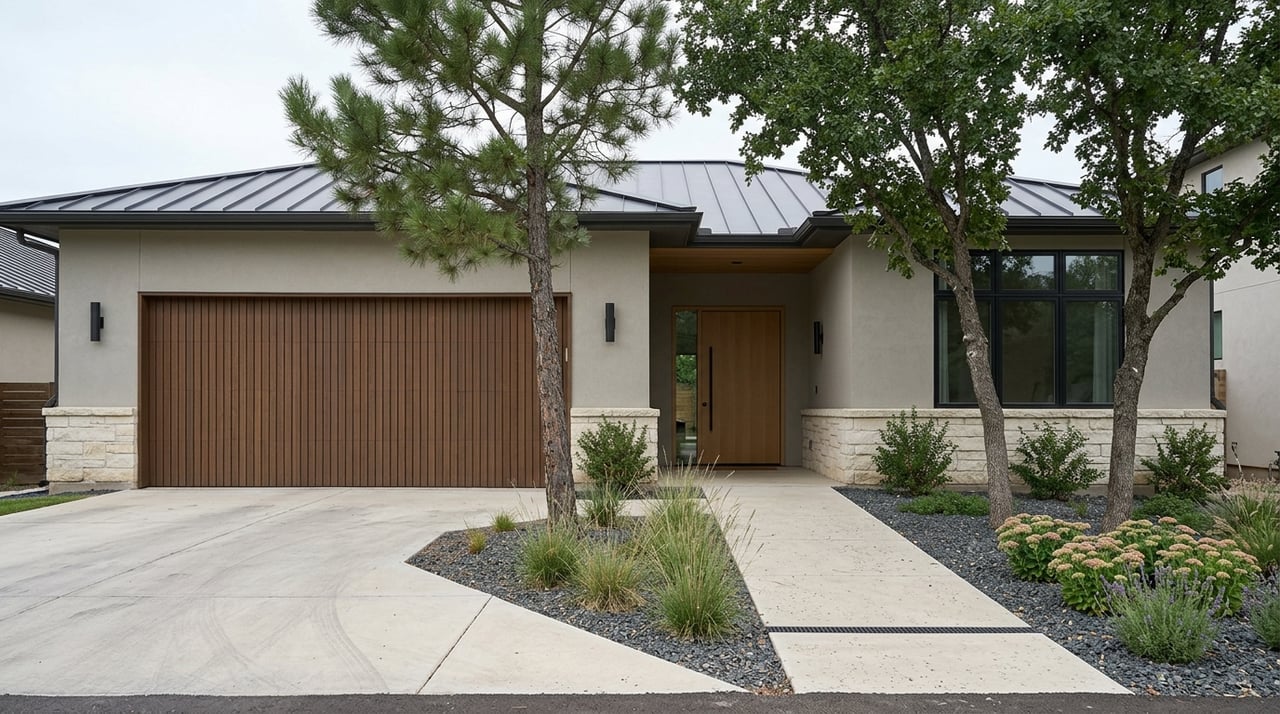
How to Price a Luxury Home in Highland Strategically
June 11, 2026
June 11, 2026
If you are selling a luxury home in Highland, pricing is not the place to guess. In a market where list prices already cluster around the million-dollar mark and lot quality can shift value in a big way, the wrong number can cost you time, leverage, and attention. The good news is that a smart pricing strategy can help your home stand out, attract serious buyers, and hold up under appraisal scrutiny. Let’s dive in.
Highland is not an average Utah market. Census data shows a median owner-occupied home value of $928,300, while current market snapshots place active asking prices near or above $1 million depending on the source and methodology.
That alone tells you something important: buyers in Highland are already shopping in a high-value range. Realtor.com shows 121 active listings with a median listing price of $999,000 and 46 median days on market, while Zillow’s April 30, 2026 snapshot shows a median list price of $1,078,333 and 15 days to pending.
At the same time, Redfin’s April 2026 snapshot reports a median sale price of $905,672, 49 days on market, a 97.9% sale-to-list ratio, and 30.6% of homes showing price drops. That mix suggests opportunity, but it also sends a clear message: buyers are active, yet they are still comparing closely and pushing back when a home overshoots the market.
In Highland’s luxury segment, the best list price usually comes from the tightest possible comparable sales group. That means looking first at homes in the same neighborhood or a clearly competing micro-market, with similar lot profile, view quality, age, and finish level.
This matters because appraisers and buyers tend to anchor to recent comparable sales. The research shows that comparable properties should share similar physical and legal characteristics, and the immediate market area is usually the strongest indicator of value.
If your home is highly customized, unusually large, or set on a rare site, broader nearby sales may need to come into play. But even then, the logic behind those choices has to be clear because the pricing still needs to make sense to both buyers and an eventual appraisal review.
Countywide numbers rarely tell the full story for Highland. The city’s land and lot characteristics are too specific, and broad averages can miss what makes one property meaningfully different from another.
A luxury home on a more standard interior lot may not compete directly with a home that has wider frontage, stronger privacy, or better visual access to open space. If you price from general square-foot averages alone, you risk either leaving value on the table or chasing a number the market will not support.
One of the biggest pricing mistakes in Highland is treating everything as a function of interior square footage. Here, land value and site quality deserve their own analysis.
Highland’s 2026 General Plan emphasizes preserving natural character and open space, and its larger single-family districts begin with 20,000-square-foot minimum lots. The city’s 2026 economic analysis estimated market land value at $480,177 per acre, compared with $41,709 per acre for Utah County overall.
That gap helps explain why lot width, usable outdoor space, privacy, and visual openness can carry real pricing weight. These are not minor perks. In many Highland transactions, they are part of the core value story.
Current inventory reinforces that point. Realtor.com shows to-be-built homes starting at $1,239,800 and $1,403,900, along with estate listings at $6.5 million for 3 acres and $8.9 million for 3.76 acres.
There are also active land listings asking $725,000 for 0.81 acre and $775,000 for 1 acre. On the lake-view side, the filtered inventory includes only 8 homes, with asking prices ranging from $905,000 to $2,645,000.
For sellers, that means view, acreage, and site usability should be treated as distinct premiums. They should not be hidden inside a generic price-per-square-foot calculation.
A luxury list price has to do two jobs at once. It has to attract the right buyer, and it has to remain defensible when the appraisal process begins.
Buyers comparison-shop in real time. They can weigh your home against resale listings, to-be-built options, and larger estate offerings across Highland.
Appraisers also rely on comparable sales and documented adjustments. If your home is priced far above the most relevant sales without a clear basis tied to lot, view, privacy, or finish quality, that gap can become a problem later in the transaction.
Some Highland properties are not easy to match. A custom home on an uncommon parcel, a residence with exceptional privacy, or a home with an unusually large footprint may not have perfect nearby comps.
In those cases, competing-market-area sales may help support value if local matches are limited. Still, the pricing has to be reasoned carefully. The stronger your explanation of what makes the property different, the more credible the number becomes.
Luxury sellers sometimes assume they can test a high number and adjust later if needed. In reality, the first pricing decision often shapes the whole listing cycle.
Recent Highland sale histories show why. One home at 10365 N 6960 W sold after 99 days following a $70,000 reduction from $1,980,000. Another at 11572 N Maple Hollow Ct sold after 186 days after a $150,100 reduction from $1,999,900. A third at 11584 N 6000 W sold after 153 days after being reduced from $1,050,000 to $950,000.
Even without final public closing prices in those histories, the pattern is instructive. Longer market times and notable reductions often suggest the original list price was ahead of what buyers were prepared to support.
When a home enters the market too high, buyers may not see it as exclusive. They may see it as mismatched.
That can lead to fewer strong showings, slower momentum, and more negotiation pressure later. In a market where Redfin reports that 30.6% of homes have price drops, thoughtful initial pricing can help you avoid becoming part of that statistic.
If you want a practical way to evaluate your price, focus on a few key questions:
These questions matter because Highland is not just selling homes. It is selling setting, land character, and scarcity.
The right number does not simply aim high or aim low. It aims to position your home where the market can recognize its value quickly.
A strong list price should:
That is especially important in Highland, where one property’s value can shift significantly based on what surrounds it, what it overlooks, and how much privacy it offers.
In a market like Highland, pricing is part analysis and part judgment. The numbers matter, but so does understanding how buyers interpret setting, scarcity, and the story of a property.
That is where high-touch luxury guidance can make a meaningful difference. A tailored pricing approach helps you avoid broad averages, frame the right premium, and launch with a number that supports both interest and credibility.
If you are considering a move in Highland and want a pricing strategy shaped by local market nuance, discreet presentation, and concierge-level service, Echelon Luxury Homes can help you evaluate your home with care and clarity.

Whether you’re searching for a secluded, Sundance mountain retreat or a custom masterpiece in Wasatch, Salt Lake, or Utah Counties, she offers a concierge-level experience designed to help you find a home that embodies your vision of the extraordinary.