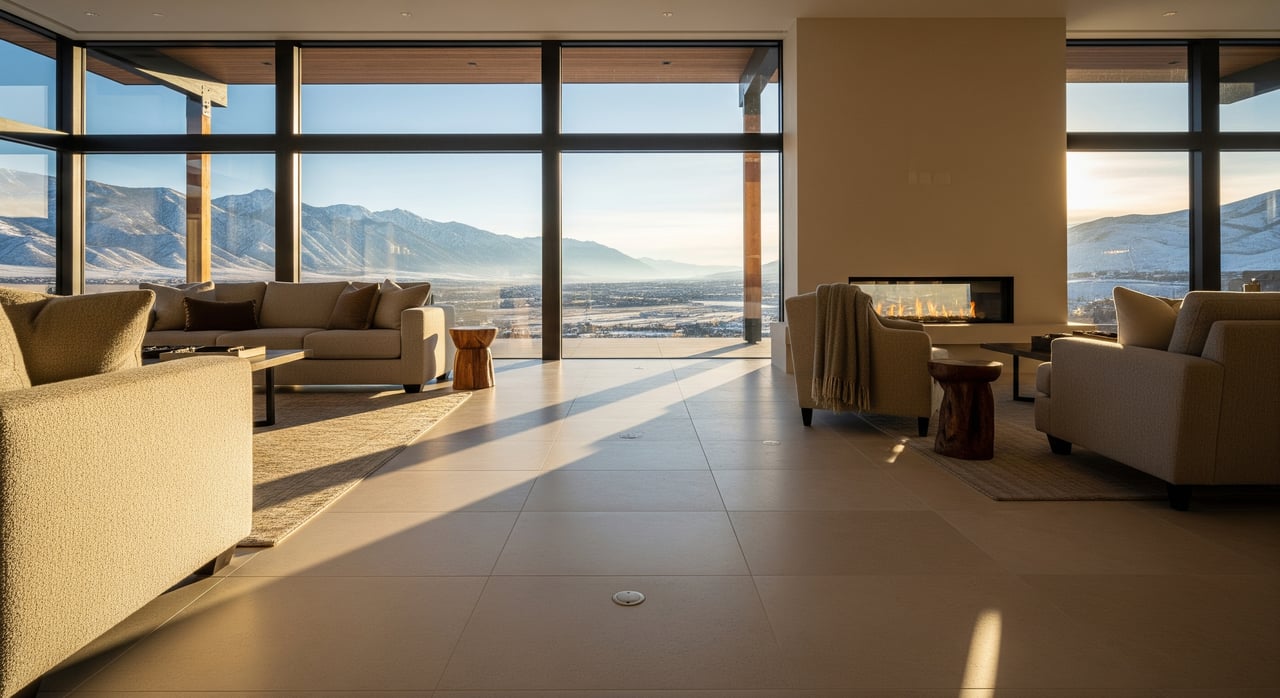
Radiant Heat vs Forced Air in Midway, Utah Homes
December 18, 2025
December 18, 2025
Cold mornings in Midway make you think about more than finishes. You feel the chill in your feet, weigh energy bills, and wonder how a heating system will affect comfort, maintenance, and resale. If you are choosing between radiant heat and forced air, you want clear, local guidance built around a mountain climate. In this guide, you will learn how each system performs in Midway, what it takes to install or upgrade, and how buyers typically respond at resale. Let’s dive in.
Midway’s winters are cold and last longer than along the valley floor. That longer heating season puts a premium on efficiency, reliability, and freeze protection. It also means your choice of heat source and distribution can shape comfort and annual costs.
Local homes range from older cabins and ranches to custom, high‑end builds and second homes. Older properties may have limited space for ducts or legacy radiators. Newer homes more often include forced air for both heat and central cooling, or radiant heat with a separate cooling strategy.
Radiant floors heat surfaces, which then gently warm you and the room. Many homeowners notice even temperatures and warm floors without drafts. Forced air warms the air and circulates it through ducts, which can feel faster coming back from a setback but can create warmer ceilings and cooler floors.
Radiant systems are quiet at the room level, with no blower noise. Forced air moves air by design, which can create noticeable vent drafts and cycling sounds. In well‑designed duct systems with proper zoning, these effects are reduced but still present compared to radiant.
Forced‑air systems can integrate whole‑house filtration and humidification in one place, which is helpful in dry mountain winters. Radiant systems reduce air movement and may lessen redistribution of dust, but you still need dedicated ventilation for healthy indoor air. For science‑based guidance on ventilation and filtration, review the EPA’s overview of ventilation for indoor air quality.
Operating cost depends less on the delivery method and more on your heat source, fuel prices, and home efficiency. Hydronic radiant can run at lower water temperatures, which pairs well with high‑efficiency condensing boilers and cold‑climate heat pumps. Forced air can be very competitive when ducts are tight and the furnace or heat pump is efficient.
Duct losses matter. In older homes, leaky or uninsulated ducts in attics or crawlspaces can add to energy use. Radiant hydronic systems avoid duct losses but rely on the boiler or heat pump’s efficiency and proper controls.
Electric in‑floor radiant is simple and thin, which makes it common in bathrooms or single rooms. In whole‑house applications, it can be costly to run when electricity prices are higher. For a high‑level view of Utah energy price trends, consult the EIA’s state energy data for Utah.
If you are exploring heat pumps with either system, the U.S. Department of Energy explains how they work and where they excel in its overview of heat pump systems. For a primer on radiant heating itself, see DOE’s guide to radiant heating.
In new builds, hydronic tubing embedded in a slab is common and cost‑effective because it installs during concrete work. Suspended or over‑floor radiant panels also work well when planned early. Forced air is straightforward in new construction, with space allocated for a well‑sealed duct network and easy integration of central AC or a ducted heat pump.
Retrofitting in‑floor radiant in a finished home is more complex. It may require removing and replacing flooring or adding a thin over‑floor panel that slightly raises floor height. Lower‑impact options include electric mats in bathrooms or hydronic baseboard and wall panels that provide radiant comfort with less disruption.
Forced‑air retrofits are usually easier if you have basement, crawlspace, or attic pathways for duct runs. In small or historic homes with limited chases, high‑velocity mini‑ducts or ductless mini‑splits can be practical alternatives.
Forced air integrates central AC or heat pumps in one system. Radiant‑only homes typically add cooling through ductless mini‑splits, high‑velocity small‑duct systems, or separate central AC. If summer whole‑house cooling is a priority, plan this early when choosing radiant.
A hydronic radiant system includes a boiler or heat pump, PEX tubing, manifolds, circulators, and controls. Annual boiler service, periodic checks of pumps and manifolds, and water quality monitoring help ensure reliability. PEX tubing embedded in slabs is durable and designed to last for decades, while boilers and pumps have shorter service lives.
Electric radiant has few moving parts. Once installed, it requires minimal mechanical maintenance. If a heating element fails under flooring, repairs can be invasive, so plan for quality installation and proper electrical protections.
Forced‑air systems need regular filter changes and annual servicing of the furnace or air handler. If you have central AC or heat pumps, schedule seasonal checks. Duct sealing and insulation improve performance and indoor air quality over time.
Radiant heat is often viewed as a premium amenity in mountain markets. Buyers seeking quiet spaces and warm floors respond well to it, especially in primary living areas and bathrooms. Many buyers also expect central cooling, so radiant‑only homes that add an elegant cooling solution tend to show better.
Forced air with a modern high‑efficiency furnace and central AC remains a familiar, serviceable standard. For value‑conscious buyers, lower fuel costs through natural gas or efficient heat pumps can be attractive. When marketing either system, highlight service records, efficiency upgrades, and how the system fits the home’s architecture and lifestyle.
Heating upgrades typically require permits and inspections. Confirm requirements with the Wasatch County website and coordinate with licensed contractors who understand cold‑climate design, slab work, and freeze protection.
Incentives can materially affect your decision. Explore the Database of State Incentives for Renewables and Efficiency for current programs on heat pumps and high‑efficiency equipment through DSIRE. Also review potential utility programs and rate structures with your providers, such as Rocky Mountain Power and Dominion Energy Utah.
Use this quick framework to align comfort, cost, and practicality:
A balanced approach is common in mountain homes: radiant in key spaces for day‑to‑day comfort, paired with a right‑sized forced‑air or mini‑split system for cooling and shoulder‑season flexibility. The best fit depends on your home’s layout, fuel access, and lifestyle priorities.
If you are weighing these choices for a Midway property, we can help you align the mechanical plan with resale goals and day‑to‑day comfort. Reach out to Echelon Luxury Homes to Request Private Access / Schedule a Private Consultation.
Whether you’re searching for a secluded, Sundance mountain retreat or a custom masterpiece in Wasatch, Salt Lake, or Utah Counties, she offers a concierge-level experience designed to help you find a home that embodies your vision of the extraordinary.