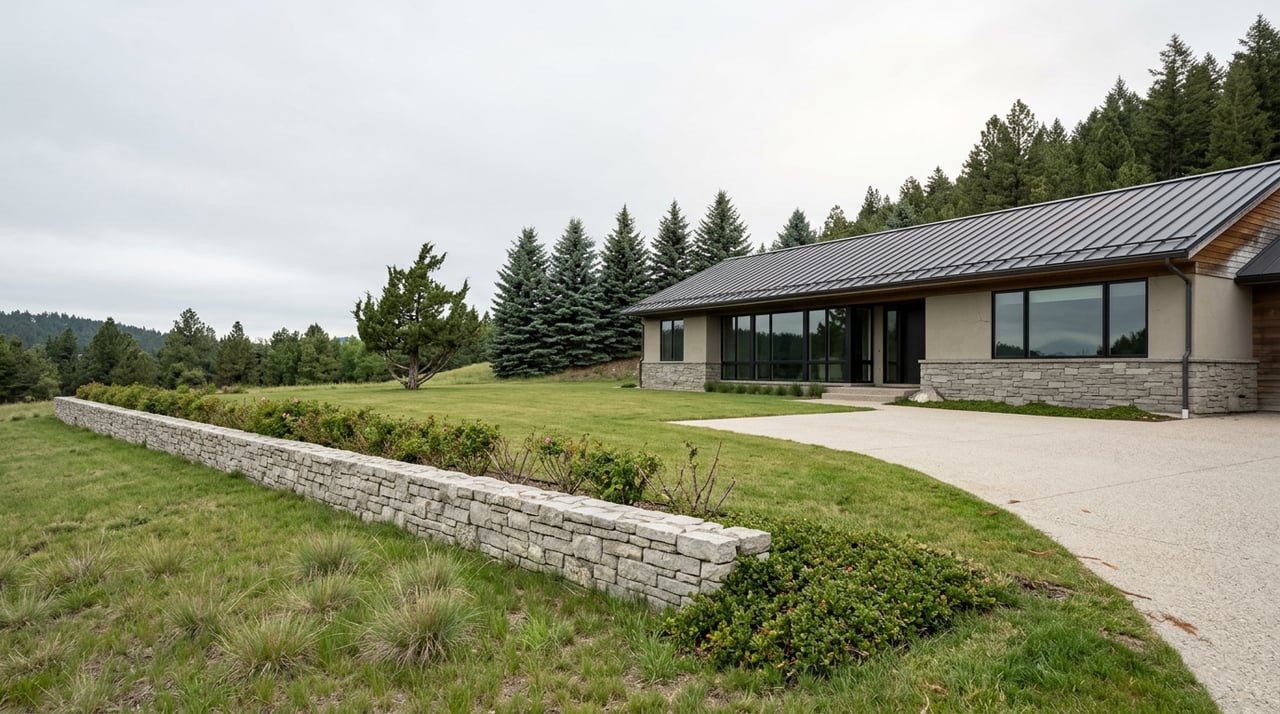
Alpine's Median Broke a Wasatch Front Record. The Acre Behind It Isn't One Thing.
September 17, 2026
September 17, 2026
In February 2026, one widely used portal put Alpine's citywide median sold price at just under $3 million. Four months later, Salt Lake Board of Realtors data covering the second quarter of 2026 put the median single-family sale price in Alpine's 84004 zip code at $1,545,000, the highest of any zip code along the entire Wasatch Front according to figures reported by KSL. Same town. Same zip code, since Alpine has only one. A gap of nearly $1.5 million between two supposedly authoritative snapshots taken months apart.
That gap is not a market correction and it is not a data error. It is what happens when a place with a genuinely small number of annual closings gets described with a single number. Alpine does not have one housing market. It has a half dozen distinct enclaves, each with its own lot conventions, its own HOA posture, and its own answer to a question buyers assume is settled the moment they see "large lot" in a listing: can I actually put a horse on this.
If you are comparing Alpine to other Wasatch Front and Utah County towns right now, the record median is real and worth knowing. But treating it as a description of a single, coherent property type will cost you time, and in a few specific cases, money.
A median is only stable when enough transactions feed it that no single sale can swing it. Alpine does not have that volume. Portal-reported figures for the town have ranged from roughly $1.06 million on an automated home value index to just under $3 million in median sold price, depending on the month, the data source, and whether the metric is a sale price, a list price, or an algorithmic estimate. That is not three different markets disagreeing. It is one small market where a handful of closings in a given month determine the headline.
Sell two homes in Lambert Park Estates and three older ramblers near the town center in the same quarter and the median tells a story about mid-range family homes. Sell three lots in Three Falls and one long-held estate in Alpine Cove instead and the median jumps by hundreds of thousands of dollars, without the underlying market having moved at all. The Q2 2026 Board of Realtors figure that put Alpine at the top of the Wasatch Front is accurate for that quarter's mix of closings. It is not a fixed price tag for the town, and it will move again the next time the composition of sales shifts.
Walk the east bench and you will pass through at least five distinct pockets that get lumped into a single "Alpine" line on every market report.
Three Falls sits along Fort Canyon on the town's eastern edge, a low-density land subdivision where remaining parcels regularly run into multiple acres and where new listings have spanned a wide range of asking prices over the past year, reflecting how differently sellers are pricing what remains. Lambert Park Estates occupies the southeast bench with a fixed inventory of custom-home lots carrying a documented half-acre minimum, most backing to open space or national forest land. Holly View Acres trades in larger multi-parcel estates that back directly to US Forest Service land. Heritage Hills and the Box Elder area sit closer to town center and are frequently marketed on the strength of having no HOA at all, a deliberate point of contrast with the gated, dues-paying enclaves nearby. Whitby Woodlands and the broader Deerfield area, closer to Creekside Park and the elementary schools, run smaller and more accessible than any of the above.
None of these behaves like the others on price, on lot rules, or on what a buyer is actually allowed to do with the land once it closes. A single citywide median averages across all of them, which means it describes none of them precisely.
| Enclave | General lot character | HOA posture | What distinguishes it |
|---|---|---|---|
| Three Falls | Multi-acre land parcels, hillside terrain | Dues-based, private roads and shared open space | Largest remaining raw-land inventory in town |
| Lambert Park Estates | Fixed inventory, half-acre minimum | Dues-based | Established custom-home community on the southeast bench |
| Holly View Acres | Large multi-parcel estates | Varies by parcel | Borders US Forest Service land directly |
| Heritage Hills / Box Elder | Estate-size lots, often sloped | Frequently HOA-free | Marketed on design freedom, no association restrictions |
| Whitby Woodlands / Deerfield | Smaller, more walkable lots | Typically none | Closest to schools and Creekside Park |
Alpine listings routinely distinguish between total platted acreage and usable acreage, and the gap between the two is not cosmetic. A hillside parcel advertised at 1.73 acres next to Three Falls, for example, has to account for slope, setback, and drainage before any of that acreage becomes a building envelope. Flatter lots elsewhere in town often deliver more functional square footage per platted acre than steeper east-bench parcels do, even when the paper number looks smaller.
The reverse pattern shows up too. Some lots back onto a seasonal creek or a deeded strip of open space that effectively extends the usable footprint well past the platted line, so a lot recorded at under half an acre can function closer to three quarters of an acre in practice. Neither version of this shows up in a median price calculation, and neither shows up on a portal's acreage filter. It shows up on a topographic survey and in the plat notes, which is exactly where a buyer comparing two similarly priced Alpine lots should be looking before assuming the larger number wins.
Alpine's own development code adds a second layer to this. A guest house, one of the more common reasons buyers want acreage in the first place, is a conditional use here, but it is only available on lots of five acres or more, and the applicant has to convey a half acre-foot of water rights to the city as part of approval. A lot with slightly less than five acres does not get partial credit toward this threshold. It either clears the line or it doesn't, and that single number determines whether a second dwelling on the property is even a legal possibility, independent of price, view, or anything else about the lot.
The HOA question in Alpine is less about cost and more about what you're trading for it. Lambert Park Estates and Three Falls both operate under associations that maintain private roads, gates, and shared open space, and that maintenance is part of what preserves the low-density feel buyers are paying for. Heritage Hills and several individual Box Elder parcels take the opposite position, marketing the absence of an HOA as the selling point: no design review board, no shared dues, no restrictions beyond the city's own code.
Neither approach is objectively better, but they produce different ownership experiences on lots that can carry near-identical price tags. A buyer weighing two comparably priced Alpine parcels should be asking not just what the dues are, but what they're buying with them, private road upkeep, gate maintenance, architectural review, and whether that structure fits how they intend to use the land.
Utah handles livestock zoning at the local level, and neighboring cities use everything from flat acreage minimums, the model Utah County itself applies in its RA-5 zone, to point-based systems elsewhere in the state that assign a value to each animal and cap the total per acre. That variation exists between cities, and it exists within them. In Alpine specifically, individual listings are marketed with explicit "animal rights" language attached to the parcel, while comparably sized neighboring lots make no such claim. That pattern only makes sense if animal rights in Alpine travel with the specific parcel's history and covenants rather than applying uniformly across every large lot in town.
The practical takeaway for a buyer who wants to keep horses is straightforward: acreage alone does not answer the question. A five-acre lot without documented animal rights may require a conditional use application with no guarantee of approval, while a smaller lot with rights already attached may be the more reliable path to what you actually want.
Before comparing price per acre across two Alpine listings, confirm four things separately: whether the stated acreage is total or usable, whether an HOA governs the parcel and what that association actually maintains, whether animal rights are documented as conveying with the property, and whether the lot clears the five-acre threshold that unlocks a guest house under the current development code. Any one of these can change what a given price actually buys, and none of them will show up in a median.
Is Alpine really the most expensive zip code on the Wasatch Front right now? Based on Salt Lake Board of Realtors data for the second quarter of 2026, as reported by KSL, Alpine's 84004 zip code posted the highest median single-family sale price of any zip code covered in that comparison. That figure reflects one quarter's closings in a low-volume market, so it is a real data point rather than a fixed price level.
Does every large lot in Alpine allow horses? No. Animal rights appear to be documented at the parcel level rather than applied uniformly across the city, so acreage alone does not guarantee the right to keep livestock. Confirm this in writing before assuming a large lot supports it.
Do I need to join an HOA to buy land in Alpine? Not necessarily. Some of the town's most established enclaves, including Lambert Park Estates and Three Falls, operate under an association, while other areas, including parts of Heritage Hills and Box Elder, are commonly marketed specifically because they carry no HOA at all.
If you're weighing two Alpine properties that look identical on paper and want someone who can read the difference before you write an offer, Echelon Luxury Homes works this market enclave by enclave, not by median. Request a private consultation and we'll walk the specific lot, the specific covenants, and the specific rights that actually determine what you're buying.

Whether you’re searching for a secluded, Sundance mountain retreat or a custom masterpiece in Wasatch, Salt Lake, or Utah Counties, she offers a concierge-level experience designed to help you find a home that embodies your vision of the extraordinary.